
Rajasthan Government Official Arrested For Accepti: What Happened and What It Means
By Aneel Kumar · 8 September 2026 · Source: Citeya
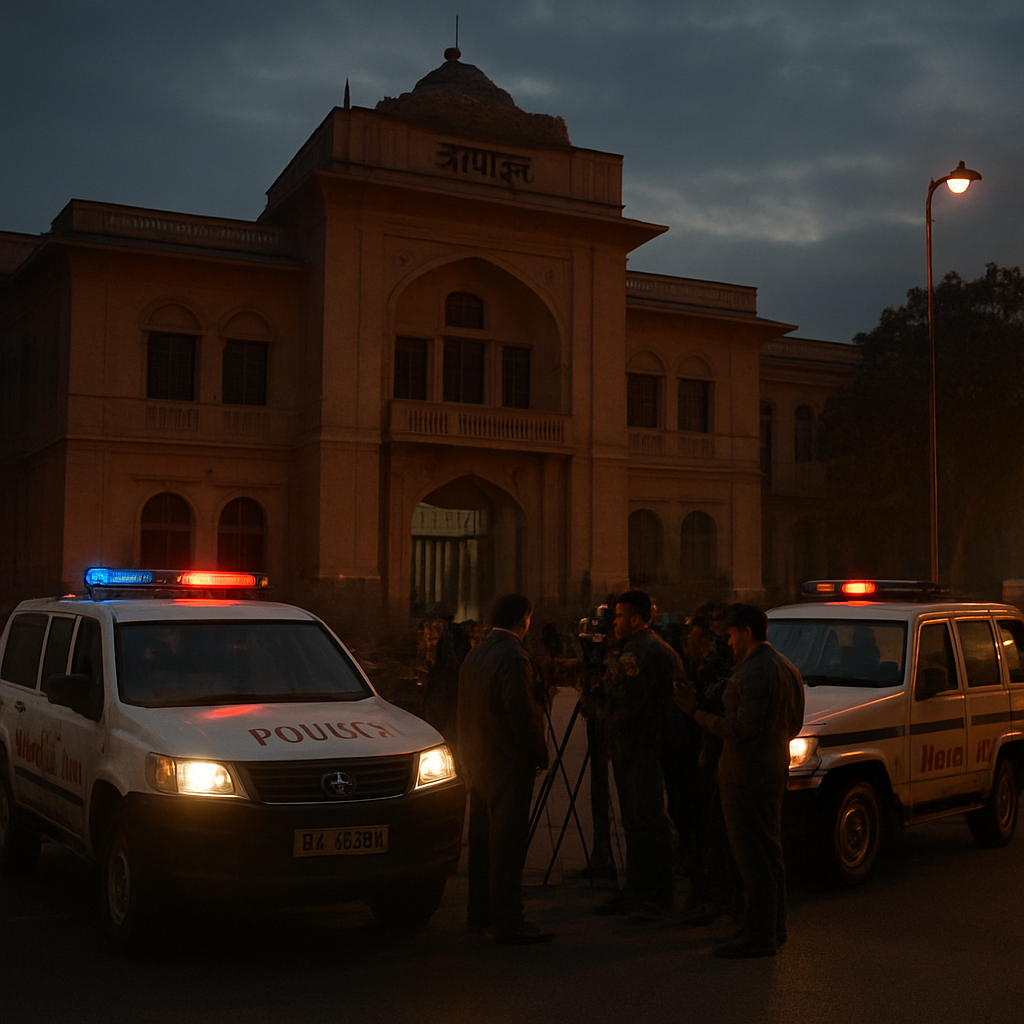
In early September 2026, Jaipur police arrested a Rajasthan government official on allegations of taking a bribe, and the case quickly reignited attention on state-level corruption and how it's policed.
Here's the thing. The arrest wasn't anonymous. Local anti-corruption teams say they detained a named public servant on bribery charges, and national outlets picked it up as one of several crime stories from Jaipur on September 4–5, 2026. According to a regional news roundup, Jaipur saw a government official arrested for bribery amid other high-profile developments on those exact dates (LatestLY, Sept 4, 2026; LatestLY, Sept 5, 2026).
The headline reads like a scandal. So what specifically happened?
What Happened: The Arrest, The Charge, And The Timeline
Local reports say the case broke in early September 2026 when police arrested someone in Jaipur over an alleged bribe. Those reports named a government official among several people arrested, framing the incident as part of a short spike in crime-and-enforcement stories around September 4–5, 2026 (LatestLY, Sept 4, 2026; LatestLY, Sept 5, 2026).
Regional outlets also documented other anti-corruption detentions in Rajasthan. For instance, a Hindi-English local outlet named Dr. Manish Agarwal and reported his arrest at Sawai Man Singh Hospital in a bribery matter tied to ACB action (Bhaskar English).
Why This Matters: Enforcement And Public Trust
This arrest matters for a few clear reasons: it signals active anti-corruption policing, it affects how people view state governance, and it can create political headaches if it happens near sensitive public events. I think those three effects together shape both short-term politics and longer-term trust in government.
Look, arrests like this are not just criminal law stories, they shape voter confidence and bureaucratic behavior.
Officials and political leaders have commented on similar precedent cases. For example, former Rajasthan Chief Minister Ashok Gehlot publicly defended his government’s earlier arrest of a national religious figure in 2013, calling that arrest appropriate in context, which establishes how political leaders publicly justify enforcement moves (Economic Times, Aug 2018 report on 2013 arrest). The fact that a senior politician framed a past arrest as justified shows how enforcement gets debated publicly.
How The Case Echoes Past Incidents (Concrete Comparisons)
Think back to the 2021 sub-inspector recruitment exam leak: the Special Operations Group arrested Head Constable Rajkumar Yadav and his son Bharat, a reminder that authorities sometimes crack down on internal corruption in recruitment (Economic Times, 2021).
The pattern is visible: enforcement often follows a scandal, sometimes years after the alleged offense.
That 2021 case involved two named arrests. This recent Jaipur arrest sits beside that pattern. The problem is, arrest is a step in a long process. It's not the verdict.
Misconceptions People Have And Why They're Wrong
A common misconception is that an arrest alone proves guilt. That isn't proof of guilt, courts, not headlines, decide that.
Officials from the Anti Corruption Bureau have authority to arrest for alleged bribery, but legal procedure, chargesheeting, and trial determine the outcome. Recent local reporting on hospital and public service arrests makes it clear that agencies act, but the judicial process still runs its course (Bhaskar English; LatestLY, Sept 4, 2026).
Ask this: does a headline mean systemic reform? No. Arrests can be corrective or symbolic. Officials often stress swift action. But authorities also need better prevention, not only reactive arrests.
What Officials And Agencies Are Saying
According to regional reporting, anti-corruption and police teams led the operation. The hospital bribery story explicitly named the Anti Corruption Bureau as the investigating agency, linking the arrest to an ACB probe (Bhaskar English article). Political statements matter too. Ashok Gehlot's comment defending an arrest from 2013 illustrates how officials will frame law enforcement as necessary for order and accountability (Economic Times, 2018).
A Practical Takeaway For Citizens And Watchdogs
If you want to act, push for transparency: file an RTI for investigation status, follow the chargesheet and court dates, and pressure for asset disclosures when public servants are involved. I honestly think public pressure, when focused and sustained, nudges cases from headlines toward meaningful accountability.
For journalists, follow the court docket, not just the arrest press release.
Frequently Asked Questions
Frequently Asked Questions
Q: What exactly does the phrase "Rajasthan Government Official Arrested For Accepti" mean? A: It refers to an event in which a Rajasthan government official was arrested on allegations of taking a bribe. Regional outlets reported such an arrest in Jaipur in early September 2026 (LatestLY, Sept 4, 2026).
Q: Does an arrest mean conviction? A: No, arrest is a legal step when investigators allege criminal conduct, but conviction requires a chargesheet and a court verdict after trial; regional reporting shows arrests often precede lengthy legal processes (Bhaskar English).
Q: How can citizens follow the progress of this case? A: Track local court records, follow official ACB or police releases, and use tools like RTI where applicable; local news sites listed the initial arrest and are a starting point (LatestLY, Sept 4 and 5, 2026; https://www.latestly.com/india/news/jaipur-latest-news-today-on-september-5th-2026-crime-surge-weather-alerts-pm-modi-visit-7590687.html).
Watch the court docket, file an RTI if you want updates, and demand clear asset disclosures, that's how headlines turn into real accountability.