
Jaipur's Historical Places: A Walk Through Six Centuries
Forts on the ridge, a palace still lived in, and a screen wall with 953 windows. A guide to the historical places in Jaipur that are actually worth your time.
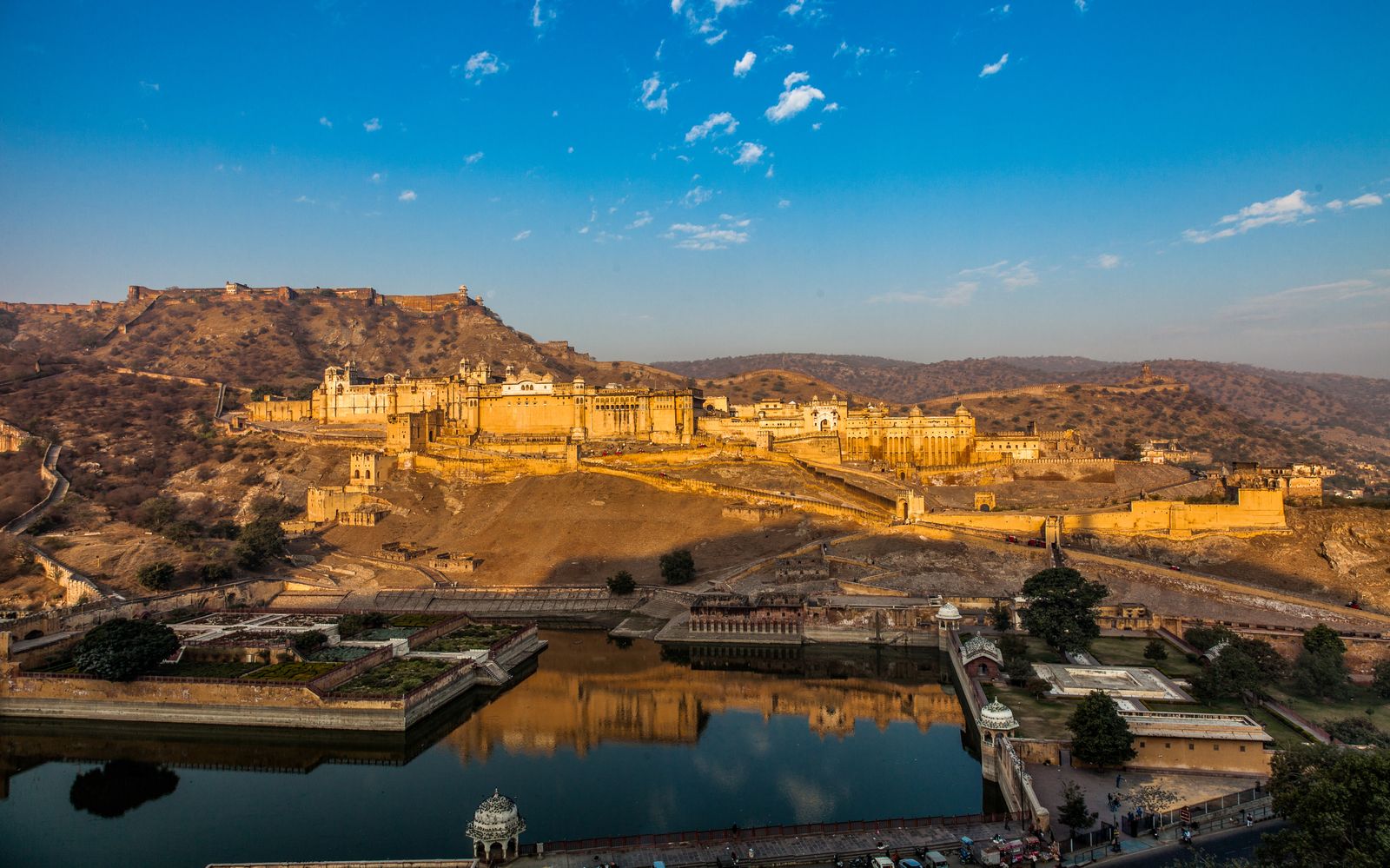
There are a lot of Jaipur historical places, and not all of them deserve the same slot in your day. Some are unmissable. A couple are famous mainly for one photograph. Let me sort them out, oldest thread first, so you can build a route that makes sense rather than crossing the city twice.
Amer Fort, the one to do first
If you see one thing, see this. Amer Fort took twenty-five years to build and was completed in 1599, and it layers Rajput and Mughal architecture across a series of courtyards climbing the hillside. The Sheesh Mahal, its ceiling set with thousands of tiny mirrors, is the room everyone remembers. Go early. By mid-morning the coach groups arrive and the magic thins out fast. It sits about ten kilometres north of the old city, so treat it as a separate outing, not a quick stop.
The City Palace, still someone's home
Down in the walled city, the City Palace was begun as Jaipur itself was founded and built between 1729 and 1732. What makes it different from most palace-museums? People still live in part of it. The current royal family occupies the Chandra Mahal, which you can see rising above the public courtyards. Look for the two giant silver urns in the Diwan-i-Khas, the largest sterling silver vessels ever made, according to Guinness.
Hawa Mahal, better than its reputation, sort of
Everyone shoots the Hawa Mahal. Built in 1799 by Maharaja Sawai Pratap Singh, it's five storeys of pink sandstone pierced by 953 small windows, so the royal women could watch the street without being seen. Here's the honest part: the famous facade is actually the back of the building, and it's far shallower than it looks. Worth a photo from the street and a quick climb, not half a day.